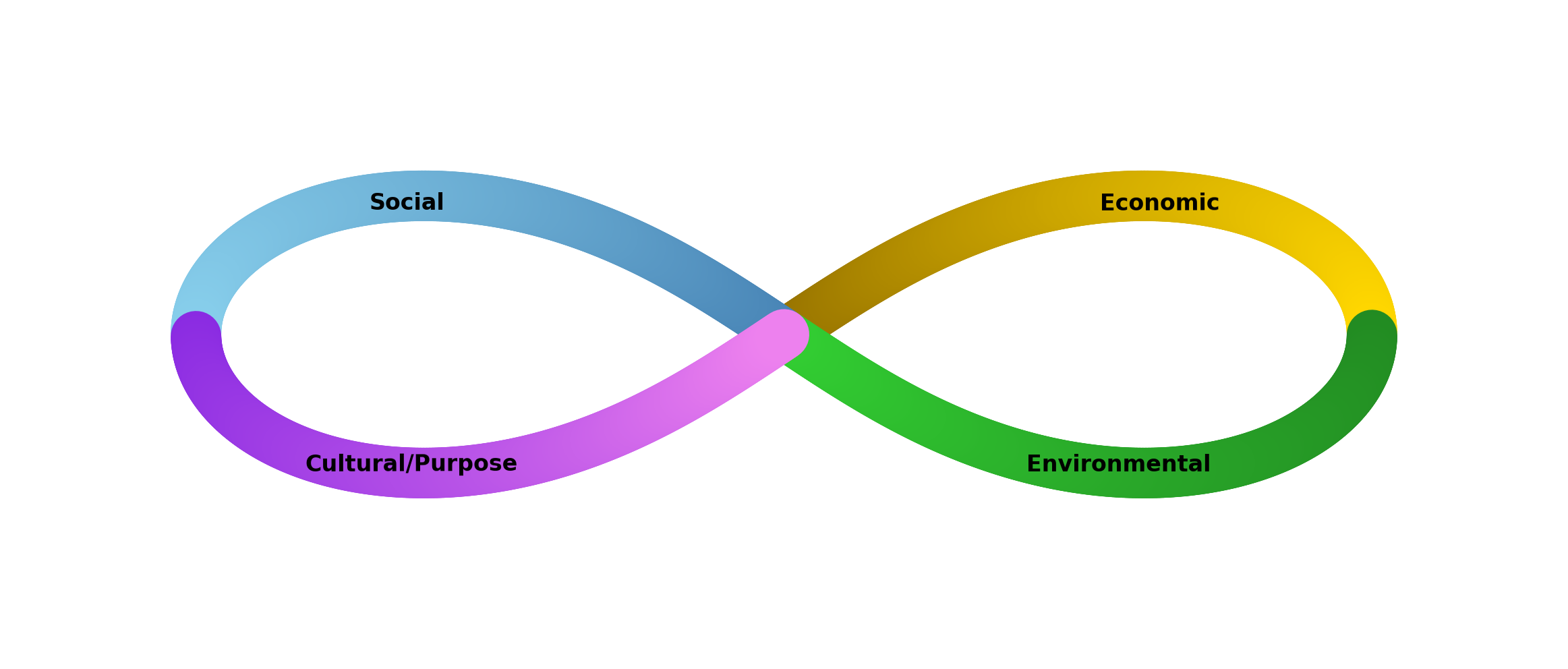
Multidimensional Assessment Engine
Multidimensional Assessment Engine: ESGETC Framework
What is ESGETC?
ESGETC is a comprehensive six-dimensional assessment framework that evaluates organizational sustainability performance across all critical business and social dimensions:
- E = Economic
- S = Social
- G = Governance
- E = Environmental
- T = Technological
- C = Connectedness
Unlike traditional one-dimensional approaches, ESGETC provides holistic measurement that reveals trade-offs, synergies, and systemic impacts.
Why Six Dimensions?
Standard ESG is Incomplete
Traditional ESG (Environmental, Social, Governance) focuses on risks and compliance. It misses:
- Economic performance - Business viability and stakeholder livelihoods
- Technology - Digital inclusion, cybersecurity, innovation capability
- Connectedness - Network effects, collaborative capacity, stakeholder alignment
The ESGETC Advantage
| Dimension | Covers | Impact |
|---|---|---|
| Economic | Job creation, income, local value, financial stability | Business viability + stakeholder livelihoods |
| Social | Equity, health, safety, participation, cultural respect | Community well-being + inclusion |
| Environmental | Climate, resources, biodiversity, waste, resilience | Planetary boundaries + ecosystem services |
| Governance | Transparency, accountability, ethics, stakeholder voice | Legitimacy + effectiveness |
| Technological | Digital infrastructure, cybersecurity, innovation, tools | Capability + competitive edge |
| Connectedness | Network density, collaboration, information flow, integration | Scale + systems thinking |
The Assessment Process
Step 1: Baseline Assessment (30-45 minutes)
Answer 31-37 framework questions covering all 6 dimensions:
Section A: Environmental (5 questions) Section B: Social (5 questions) Section C: Governance (5 questions) Section D: Economic (5 questions) Section E: Technology (5 questions) Section F: Connectedness (6 questions) ⭐ Section G: Meta-Weighting (Optional)
- Stakeholder Weights: Incorporate community input on what matters most
- Sector Weights: Industry best-practice weightings
- Adjustment: Weights can be modified per assessment cycle
Scoring
Raw data transformed to 0-100 scale:
- 0-20: Critical (immediate action required)
- 21-40: Poor (significant improvement needed)
- 41-60: Moderate (improvement opportunity)
- 61-80: Good (strong performance)
- 81-100: Excellent (best-in-class)
Normalization
Data from different units (kg CO₂e, employees, USD) harmonized:
- Converts to common scale
- Adjusts for organization size/context
- Enables cross-dimensional comparison
5.4 Adaptive Algorithms & Contextualization
The engine adapts based on:
- Organization Type: Nonprofit, corporate, government, SME
- Sector: Agriculture, tech, financial services, manufacturing, etc.
- Geography: Climate, regulatory environment, socioeconomic context
- Scale: Startup, mid-size, enterprise
- Maturity: First-time assessment vs. multiyear tracking
Example: Environmental scoring for a tech company (low-carbon manufacturing) differs from mining company with same absolute emissions due to sector context.
5.5 Customizing Assessment Models
Create organization-specific assessments:
- Go to Assessments → Assessment Templates
- Select Create New Template or duplicate existing
- Configure Dimensions:
- Enable/disable specific dimensions
- Adjust relative weights
- Set scoring thresholds
- Add Indicators:
- Select from library or add custom indicators
- Define data collection method
- Set targets and benchmarks
- Set Organization Context:
- Geographic scope
- Relevant SDGs
- Stakeholder groups
- Planning timeframe
- Save & Share: Make available to team members
5.6 Benchmarking & Comparative Analytics
Compare performance across:
- Time Series: Track improvement over multiple assessment cycles
- Peer Comparison: Anonymous benchmarking against sector peers
- Best-in-Class: Compare to industry leaders
- Geographic Standards: Compare to regional averages
- Targets: Monitor progress toward set goals
Benchmarking Report includes:
- Your score vs. peer median and range
- Dimension breakdown comparison
- Areas of relative strength and weakness
- Recommended improvement priorities
- Projected trajectory if trends continue
Access via Analytics → Benchmarking after each assessment cycle.
Advanced Assessment Capabilities
Triple Materiality (3D Systemic Materiality)
The platform has evolved to a three-lens materiality system: Financial, Impact, and Systemic. The third dimension captures network effects, feedback loops, and transformation potential — placing every materiality topic in one of 8 octants rather than the traditional 6 quadrants.
→ Triple Materiality Deep Dive
ESGETC Investment Screening
Apply the 6D framework to investment analysis. Screen individual companies or entire fund portfolios for sustainability performance, with customizable dimensional weighting per fund mandate, a Balance Score to penalize dimensional imbalances, and SDG alignment mapping.
Next: Learn about Engagement Tools to collect stakeholder input and build support for actions.